

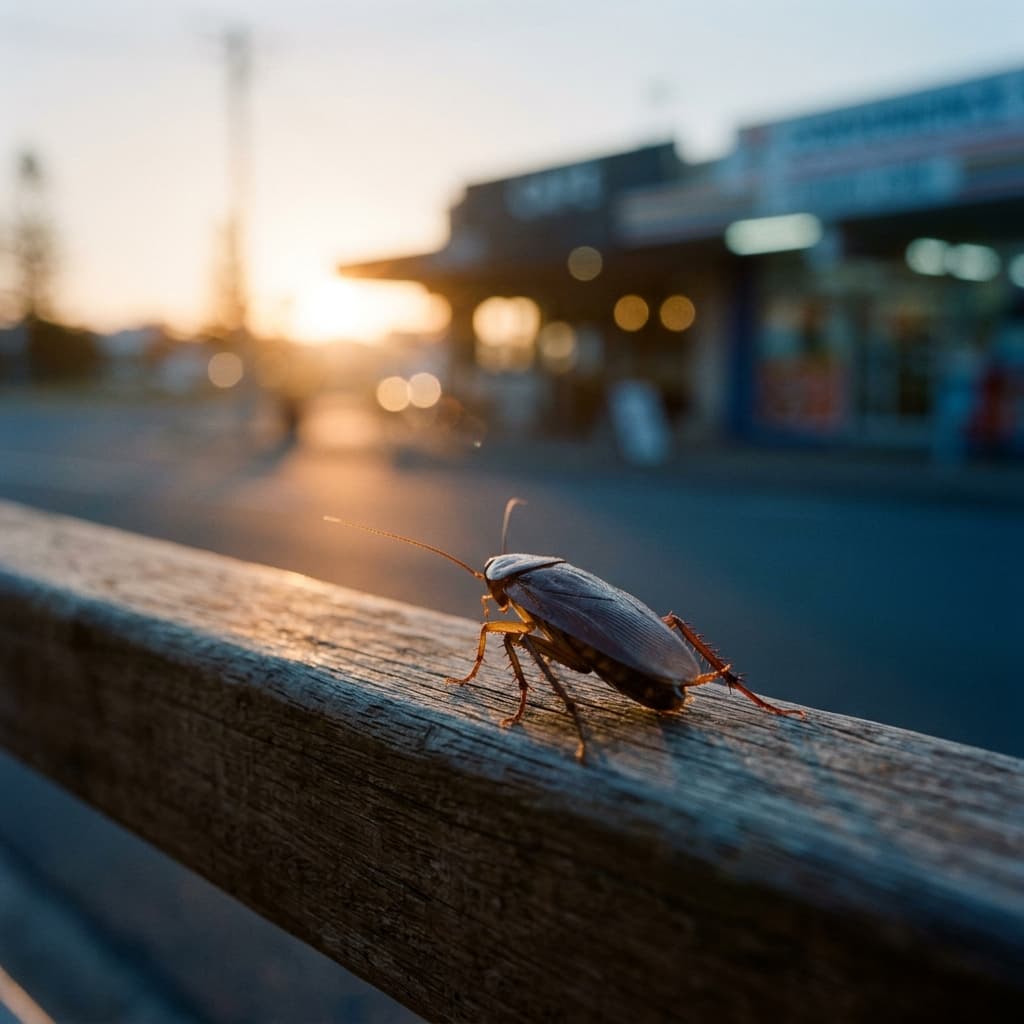
Sydney is the cockroach capital of Australia. It's not a flattering title, but it's an accurate one. And for business owners in the hospitality, food retail, healthcare, and commercial property sectors, it carries real consequences every time the mercury climbs.
October marks the start of the window that pest managers across NSW dread most: the months-long run-up to peak cockroach season. As temperatures in Greater Sydney push past 25°C and humidity builds along the coast, cockroach populations that have been ticking over through winter shift into overdrive. Breeding cycles compress. Populations explode. And businesses that haven't prepared find themselves managing an active infestation in the middle of their busiest trading period of the year.
This is your pre-summer checklist.
Why Summer Hits Differently for NSW Businesses
Cockroaches are cold-blooded — their metabolism, breeding rate, and activity level all track with ambient temperature. In Sydney's warm, humid summers, the German cockroach (Blattella germanica) is the species that causes the most damage to commercial properties. And it causes it fast.
A single egg capsule (ootheca) carried into a food premises — inside a cardboard delivery box, a food supplier's crate, or a second-hand piece of equipment — can lead to an infestation of up to 20,000 cockroaches within a year, according to NSW Food Authority guidance. In summer conditions, with temperature and humidity accelerating every stage of the life cycle, that number can be reached significantly faster.
German cockroaches are a different problem from the large peridomestic cockroaches (Australian cockroach / American cockroach) that occasionally wander in from outdoors. They live entirely indoors — inside wall voids, behind equipment, under appliances, in the gaps of splashbacks and joinery — and they never leave unless you force them out. They're also developing resistance to commonly used spray insecticides in some Sydney populations, which is precisely why professional gel bait programs have become the standard of care for commercial kitchens and food businesses.
Which NSW Businesses Are Most at Risk?
While any commercial property can harbour cockroaches, the risk is highest where three conditions converge: warmth, moisture, and food. That puts the following sectors at the top of the list every summer:
Restaurants, cafés, and commercial kitchens. The combination of cooking heat, grease, food debris, and complex joinery makes a busy kitchen an almost ideal cockroach habitat. German cockroaches thrive behind ovens, inside dishwasher cavities, under fryers, along pipe runs, and inside the hinges and crevices of cabinetry. In an active kitchen, these areas are also the hardest to clean thoroughly — which is exactly where infestations establish and persist.
Hotels and accommodation properties. Kitchens, laundries, bin storage areas, and linen rooms are all high-risk zones. A cockroach sighting in a guest room is a reputational event, not just an operational one.
Aged care and healthcare facilities. These environments carry heightened compliance obligations and heightened risk to vulnerable occupants. Cockroaches are vectors for Salmonella, E. coli, and a range of other pathogens, and allergens from cockroach droppings and cast skins can trigger asthma and allergic reactions in residents and patients.
Food manufacturing and processing. A cockroach incident in a production environment can trigger a product recall, a failed third-party audit, or a supply chain suspension — all of which carry costs that far exceed the investment in a prevention program.
Strata and mixed-use commercial buildings. Cockroaches move freely between tenancies through shared pipe runs, wall cavities, and electrical conduits. A problem in one unit quickly becomes a problem for the whole building.
Where Cockroaches Hide in a Commercial Property
Effective cockroach management starts with understanding where infestations establish. German cockroaches are thigmotactic. They prefer tight, enclosed spaces where their bodies make contact with surfaces on multiple sides. In a commercial kitchen or food premises, that means:
- Behind and beneath cooking equipment, particularly ovens, fryers, and dishwashers
- Inside the motor housings of refrigeration units
- Along pipe runs and inside wall penetrations
- In the gaps between fixed equipment and walls or floors
- Inside electrical switchboards and control panels (warmth makes these attractive)
- Behind splashbacks and inside tiled wall crevices
- In drain covers and waste areas
In office, retail, and hospitality environments beyond the kitchen, hotspots include lunchrooms and staff kitchens, bin storage areas, server rooms, and any area where moisture accumulates — leaking pipes, poorly sealed floor penetrations, and condensation-prone areas near air conditioning.
The Signs to Watch For Right Now
Your team is your best early detection system. Train staff — particularly kitchen hands, cleaners, and opening/closing crew — to report any of the following immediately:
Live cockroaches, especially during daylight hours (daytime sightings suggest a large, established population under pressure)
Droppings, which look like dark pepper-like specks or small cylindrical pellets, found along walls, behind equipment, or inside cupboards
Egg cases (oothecae), which are small brown capsules approximately 6–9mm long, found in sheltered locations
Cast skins, the pale, papery shed exoskeletons left as cockroaches moult through their life stages
Musty or oily odour, a characteristic smell that intensifies with population size
Smear marks, dark, irregular streaks along walls and surfaces at cockroach running height
Any one of these signs warrants immediate professional assessment. In a food premises, they also need to be documented — both for your own records and in case of an Environmental Health Officer inspection.
What to Do Before Summer Arrives: A Pre-Season Checklist
The most cost-effective cockroach management is always preventive. Here's what NSW commercial properties should be doing right now, in October, before summer conditions fully take hold.
1. Deep clean all equipment and fixed joinery. Pull out ovens, fryers, and refrigeration units if possible, and clean the void behind and beneath them. Grease accumulation in these areas is a primary food source for cockroaches and makes treatment less effective.
2. Seal gaps and cracks. Walk your premises and identify gaps around pipe penetrations, along skirting boards, behind splashbacks, and around the bases of fixed equipment. Use food-safe sealant to close these off. You're eliminating harborage and reducing the surface area a professional treatment needs to cover.
3. Review your waste management. Bins should have tight-fitting lids, be emptied regularly, and be stored as far from the building as practical. Bin enclosures should be cleaned frequently. Waste areas are a primary cockroach attractant that gets worse through summer.
4. Audit your delivery protocols. Cockroaches routinely arrive in cardboard cartons and supplier packaging. Train receiving staff to check incoming deliveries for signs of pest activity, and where practical, decant goods out of cardboard and into sealed food-safe containers before they enter your storage areas.
5. Book a professional inspection now. Before summer demand peaks, have a licensed pest management professional conduct a thorough inspection of your premises. They'll identify harborage zones, assess your current risk level, and recommend a treatment program tailored to your site, your industry, and your compliance obligations.
Why DIY Doesn't Cut It for Commercial Properties
Over-the-counter cockroach sprays and baits are designed for residential use and are no match for an established German cockroach population in a commercial setting. There are two core reasons for this.
First, spray-based treatments applied without knowledge of the infestation's harborage sites will disperse cockroaches through the premises without eliminating them, often making the problem harder to treat. Second, and increasingly relevant in Sydney, German cockroach populations in some urban areas are showing resistance to pyrethroid-based insecticides. A professional gel bait program, using appropriately rotated active ingredients and applied in precise placements targeting actual harborage zones, is significantly more effective — and leaves no residue on food preparation surfaces.
For food businesses, there's also the compliance dimension. A professional treatment provides you with a service report, chemical register, and site map that stands up to scrutiny from council Environmental Health Officers, NSW Food Authority inspectors, or third-party auditors. A DIY treatment provides none of that.
How Safe Spray Pest Control Protects NSW Commercial Properties
At Safe Spray Pest Control, our summer cockroach programs are built around the specific pest pressures facing NSW commercial properties — not generic treatment schedules. Our licensed technicians assess your premises, identify active harborage zones, and implement targeted gel bait programs that deliver fast knockdown and long-term population reduction, without disrupting your operations.
Our commercial cockroach services include:
- Full premises inspection with a written harborage and risk assessment
- Targeted gel bait programs for German cockroach control in commercial kitchens and food premises
- Crack-and-crevice treatments in all high-risk zones
- Ongoing monitoring visits with service reports suitable for council, NSW Food Authority, and third-party audits
- Staff awareness briefings on hygiene practices that support treatment effectiveness
- Emergency response for active infestations, including after-hours availability
Summer is weeks away. The businesses that come through peak season without an incident are the ones that started their prevention program before the temperatures peaked — not after.
Contact Safe Spray Pest Control today to book your pre-summer commercial inspection across NSW.
*Safe Spray Pest Control — Licensed Residential and Commercial Pest Management Specialists, Serving NSW and the rest of Australia.